

In this episode of Transform Your Workplace, host Brandon Laws sits down with business founder, consultant, and author Chris Ronzio to talk about his recent publication, The Business Playbook. The two discuss how you can effectively scale your business by documenting and delegating your company’s profile, people, policies, and processes.
GUEST AT A GLANCE
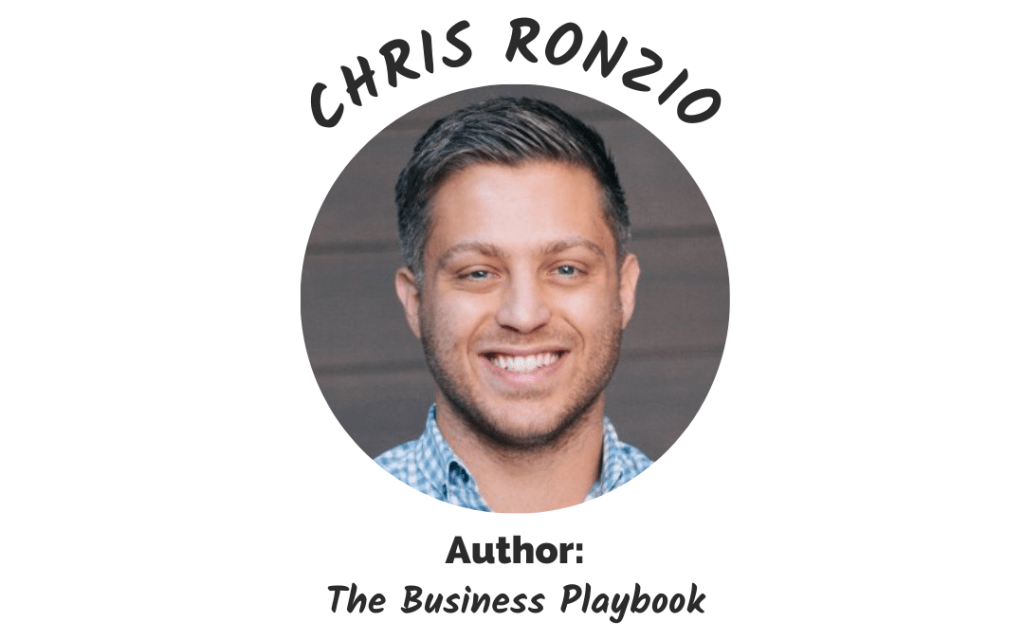
Chris Ronzio is the founder of Organize Chaos and Trainual, a “modern training manual for growing businesses.” He is also the author of The Business Playbook: How to Document and Delegate What You Do So Your Company Can Grow Beyond You. Chris is passionate about helping leaders from all over the world grow their businesses.
A QUICK GLIMPSE INTO OUR PODCAST
🔊 Podcast: Transform Your Workplace, sponsored by Xenium HR
🎙️ Host: Brandon Laws
📋 In his own words: “The Transform Your Workplace podcast is your go-to source for the latest workplace trends, big ideas, and time-tested methods straight from the mouths of industry experts and respected thought-leaders.”
THE BREAKING POINT
Chris had just graduated college, moved out to Arizona, and was running a successful video company. He explained, “We would find a crew in the city of an event, we would staff the event, send them all the gear that they needed, and they’d film the event and send the gear back to us.” In “a perfect world,” according to Chris, this was how the business was supposed to function.
But one holiday season, things didn’t go so smoothly. Chris and his wife had already made their plans for the holidays when he got a call on a Friday afternoon that his entire crew had pulled out of an event planned for the next morning in Southern California.
Chris went into panic mode. “I had no other options other than to try to staff the event last-minute. Late at night, I got in my car, canceled all of my holiday plans, and I drove six hours out to LA.” Ultimately, he ended up having to rent equipment and film the event himself.
“And so I’m thinking, ‘This isn’t how business is supposed to work.’ How many times have business owners or leaders out there had to jump back in and save the day?” Chris realized that if he had had processes and backup plans and ways to train people, he wouldn’t have reached this breaking point. He needed a business system.
PODCAST EPISODE HIGHLIGHTS
An Eye-Opening Idea
“I read Michael Gerber’s book, The E-Myth, and it was an epiphany for me. It was eye-opening that you can’t be the technician and do every job in the business. You’ve got to create systems. In his book, he said that every business needs an operations manual. They need to think of themselves as a franchise that would have a franchise manual. And so after years of trial and error through my video company, finally, I had systems that worked. […] And it wasn’t until I had those systems that I felt empowered to really run the business and to be the leader, the entrepreneur.”
Problems with Scaling
“The problem comes down to the owner, the entrepreneur. A leader can’t delegate, and they’re not able to translate how they do what they do to someone else and replicate it. Or maybe they don’t want to. […] You just need to come together and ask, ‘What is the company way? How do we do this?’ And that’s not to say that there shouldn’t be constant innovation and suggesting new best practices, but at different milestones along the way, you have to get aligned and make sure people are doing things all consistently.”
The Danger of Stepping In
“It’s a total Catch-22 because it might be easier to step in and fix a problem this time and maybe next time, and maybe even the time after that. But if you add up the hundred times that you’re going to step in and do it, it would’ve been easier to show someone, even if it takes a little bit more time up front.”
The Business Playbook
“In working with so many businesses — thousands of companies around the world — I saw that people want to write down and quantify more than just their processes. There’s a lot more to it. And so the playbook is really four different elements. […] When you combine the company’s profile, the people, the policies, and the processes, that’s what makes up a real, complete playbook.”
The Profile
“When you start a business and you’re an entrepreneur, you’re telling everybody your story, how this business works, and who you are, what you do, and what you sell. And then it becomes more and more and more diluted the further you as an owner get away from doing that onboarding. So the profile is about capturing this whole story consistently so that you’re giving everyone that comes in the complete story.”
The People
“People come and go, but also roles and responsibilities are ever-evolving. In a growing business, it’s like cells dividing — you start with just a couple of people doing everything, and then you bring on a few more people, and then a few more. Each time you do that, you’re either creating new responsibilities or you’re delegating existing responsibilities to some of those new people. And who does what — just the simple idea of division of roles and responsibilities — is a precursor to any type of documentation. Because if people don’t know what’s expected of them to be successful in their role, then they’re lost.”
The Policies
“What isn’t always touched on in a handbook are the unwritten rules. You know, the norms that exist in our business, the things that are okay or not okay. What I’m encouraging people to do is to think about all those areas of the business where you didn’t tell someone a rule up front, but when they were breaking it, you realized it’s a rule. And that’s what creating expectations for people is all about. The policy isn’t about creating a lot of bureaucracy and red tape. It’s about setting clear expectations.”
The Processes
“First, you want to think about what tasks are completed most often in the business.
[…] The next thing process-wise that you might document is something that is a shared responsibility that a lot of people do. An example of that is retail. Maybe everyone needs to know how to use the cash register, process gift cards, and process returns. And if you don’t get everybody trained on that thing, that’s where it leads to a lot of questions between people and a lot of time wasted. And then the last thing you might think about is what you need to delegate.”
Owning the Playbook
“There should always be a better way. Businesses are built to innovate and to continue getting better. And when you’ve got a playbook, it’s not just that you’re assigning it to somebody and it’s this top-down thing. It’s more like you’re empowering them to own it. In a perfect scenario, I think the playbook is very much a collaborative compilation of living documents, where people can access it, create more information, edit it, and suggest changes.”
Staying Ahead of the Game
“It’s really about creating a great experience for your people, giving them clear expectations, and then letting them take ownership on improving their area of the business. And if everyone across the company is doing that and it’s assembled in one place, then you’re going to be ahead of the game.”
LEARN MORE
Grab yourself a copy of The Business Playbook on Amazon or wherever books are sold. You can also learn more about successfully scaling your business by checking out thebusinessplaybook.com or listening to Chris’ business podcasts, here or here.